

Potassium nitrate was superior to potassium sulfate and potassium chloride in terms of tuber yield and potato size.
Greenhouse, Greenhouse, K2SO4, KCI, KNO3, MOP, NOP, Number of tubers, Papa, Performance, Pot experiment, Pot experiment, Potassium, Potassium, Potassium chloride, Potassium chloride, Potassium nitrate, Potassium sulfate, Potato, Potato, SOP, Tuber, Tuber, Tuber size, Tuber Size, Tuber yield, Tuber yield,
Bester and Maree (1990) clearly showed the benefit of potassium nitrate compared to potassium chloride or potassium sulfate for potato fertilization in a pot experiment. The amounts of nutrients applied were equal. Under controlled nutritional and environmental conditions, potassium nitrate application produced the highest tuber yield (Figure 1). The highest number of tubers and significantly larger tuber size were produced in potato plants nourished with potassium nitrate (Table 1).
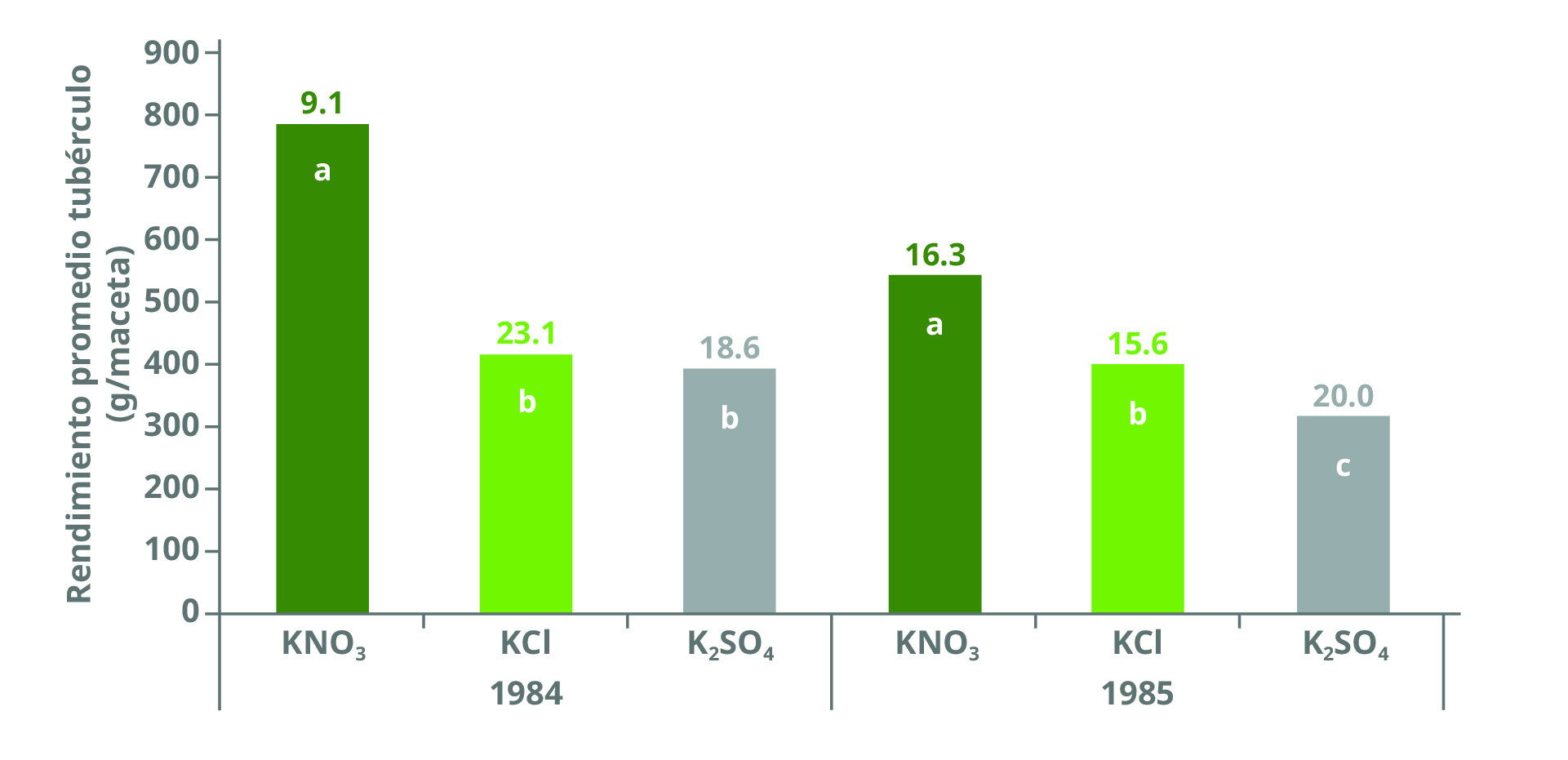
Average tuber yield (g/pod) for three K sources in two growing seasons.
Table 1. Effect of K sources on average tuber weight (g) and number of tubers produced. 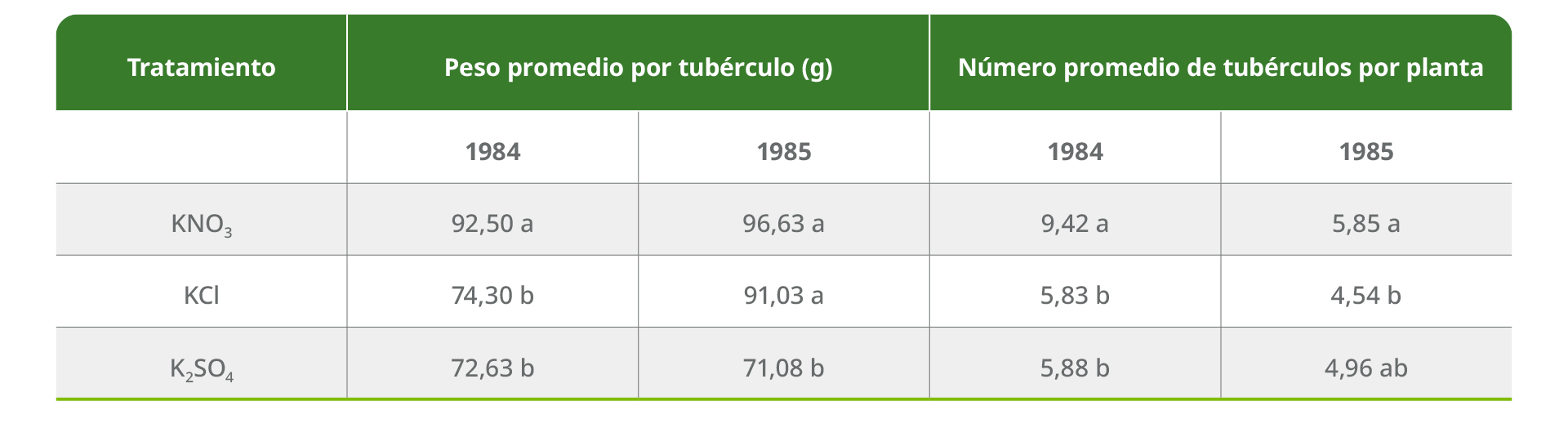
Author
Bester, G.G. and P.C.J. Maree. 1990. Invloed van kalium bemestingstowwe op knolopbrengs en persentasie droëmateriaal van Solanum tuberosum L. knolle. S. Afr. Tydskr. Plant Grond, 7: 40-44