
Principles of mineral nutrition of the potato crop
Absorption, Absorption, Nutrient, Nutrient, Nutrient demand, Nutrient demand, Nutrition, Papa, Performance, Size, Size, Starch, Starch, Tuber, Tuber,
Nutrient demand
Due to the high yield potential and the accumulation of starch in the tubers, potato crops require large amounts of nutrients, especially potassium.
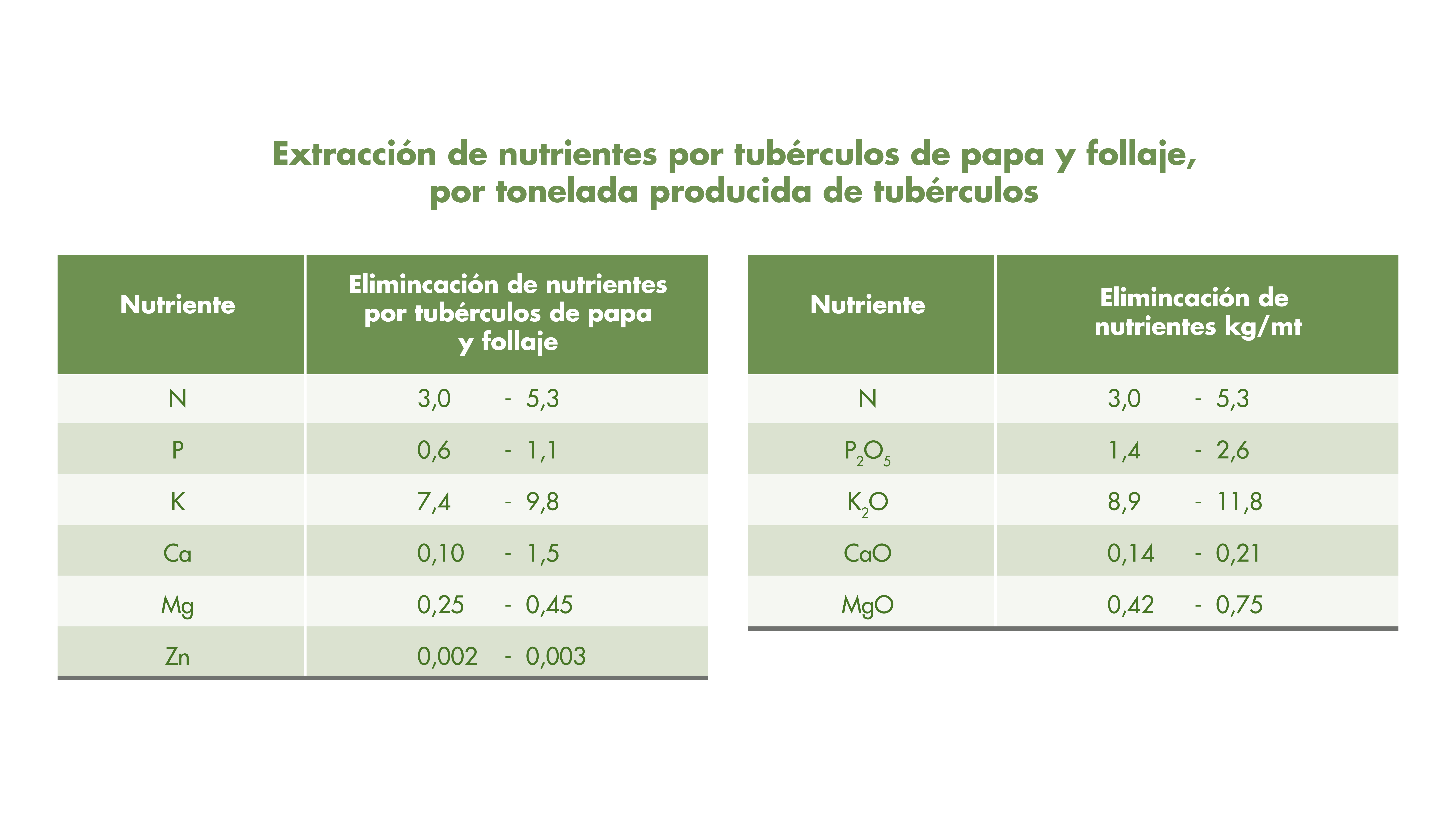
Dean, 1994.
Potato crops remove two to three times more potassium than nitrogen.
The specific contributions of nutrients to potato production and quality.
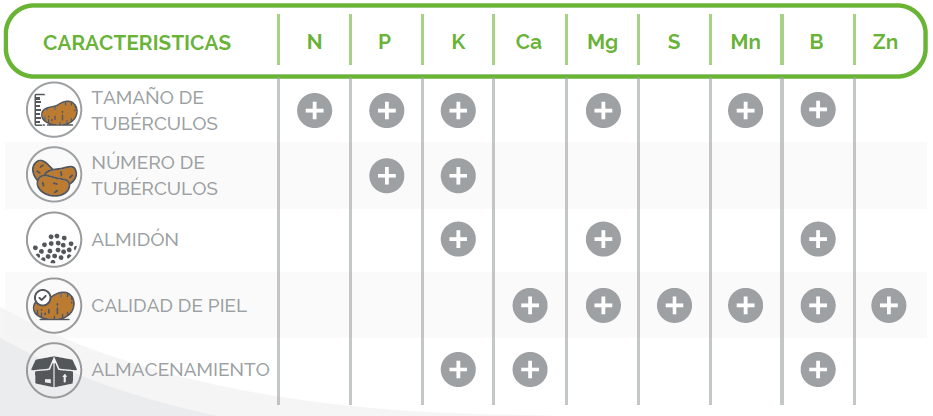
Summary of functions of the main nutrients
Each element has specific functions within potato development.
NitrogenProtein synthesis (growth and yield). Nitrate participates in the formation of cytokinins.
PhosphorusHelps form and develop the root system and energetic compounds, and aids in cell division.
Potassium: Transports carbohydrates, regulates osmosis and stomata control, improves photosynthesis and reduces susceptibility to diseases.
CalciumImproves tuber storage and skin quality, and reduces susceptibility to disease.
SulfurSynthesis of essential amino acids, cysteine and methionine.
Magnesium: Indispensable part of the chlorophyll molecule.
Iron: Chlorophyll synthesis.
ManganeseNecessary in the photosynthesis process.
BoronCell wall formation (pectins and lignins). Participates in the metabolism and transport of sugars.
ZincAuxin synthesis.
CopperCopper: Influences the metabolism of nitrogen and carbohydrates.
MolybdenumIt is part of the enzyme nitrate reductase and nitrogenase.