Blueberry Nutrition with Ultrasol®ine K Plus and Ultrasol® Magnum Special in Poland
Tags
The use of Ultrasol®ine K Plus and Ultrasol® Magnum Special as part of a balanced fertilization program for highbush blueberries grown for the fresh produce market has once again shown a positive impact on both yield and fruit quality. The results included increased yields, a higher number of berries per plant, and improved postharvest shelf life.
Ultrasol®ine K Plus, a potassium nitrate fertilizer enriched with iodine, has a significant influence on both vegetative and generative plant development. During the vegetative phase, treated plants developed additional shoots, increasing light interception and thus enabling more efficient photosynthesis. In the generative phase, this translated into higher chlorophyll content, more effective conversion of solar energy into chemical energy, and a more intense transformation of CO₂ into sugars.
Ultrasol® Magnum Special is a product line designed specifically for acid-loving crops, particularly blueberries. These fertilizers are characterized by a low pH (in 1% solution – below 3) and a low EC (~1.4 mS/cm), allowing for efficient nutrient uptake with minimal risk of salt stress symptoms.
Following a snowless winter, vegetation in 2023 started early. Despite the low temperatures in March and April, there was no visible frost damage, allowing for good flower retention. However, some flowers were subtly affected and failed to develop fruit or produced deformed berries. Weather conditions also favored fungal infections, and signs of gray mold (Botrytis) were observed in some areas.
Fertilizing Highbush Blueberry with Potassium Nitrate with Iodine – Karczmiska 2023
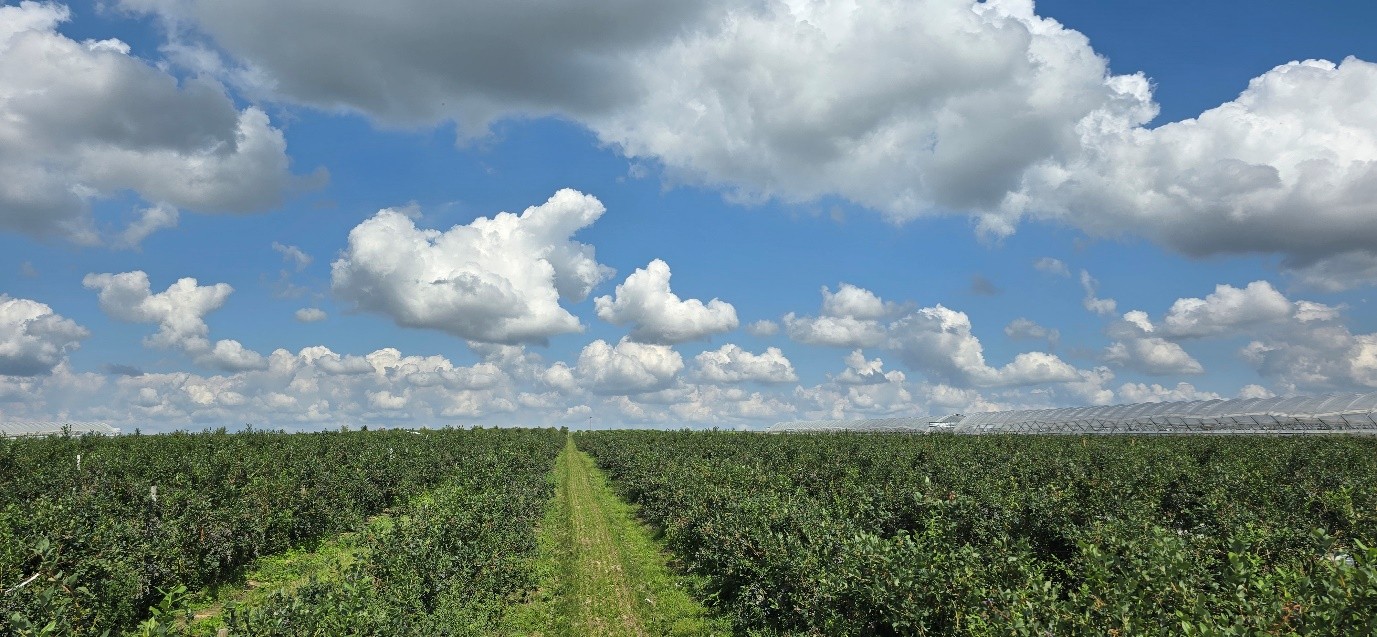
The trials were conducted at the fruit farm Horti Team P. Krawiec in Karczmiska, Poland, in a ‘Bluecrop’ blueberry plantation. Three fertilization programs were compared:
· Standard program: base application of granular 12-11-18, followed by fertigation with potassium sulfate (SOP), monoammonium phosphate (MAP), calcium nitrate, and magnesium sulfate (Mag Sul).
· Ultrasol® Magnum Special program: same base 12-11-18, fertigation with Ultrasol® Magnum products, calcium nitrate, and magnesium sulfate.
· Ultrasol®ine K Plus program: same base 12-11-18, fertigation using straight fertilizers based on nutrient equivalence, plus the new Ultrasol®ine product (potassium salt with added iodine).
The results showed that iodine, in the form of potassium nitrate (Ultrasol®ine K Plus), had a positive effect on yield. Both the Ultrasol®ine K Plus and Ultrasol® Magnum Special programs outperformed the standard program, also increasing the number of fruits per plant.
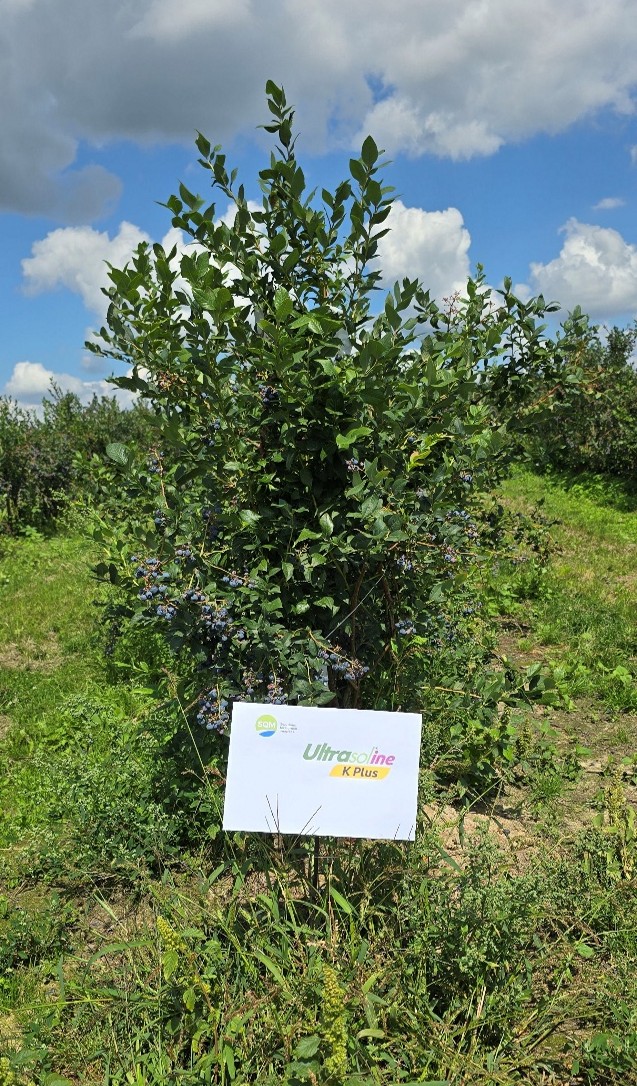
Trial Results – Karczmiska 2023
Table 1. Yield of ‘Bluecrop’ Blueberries (t/ha)
________________________________________
Program Yield (t/ha)
Standard Program 15.84
Ultrasol® Magnum Special 20.50 (+29.4%)
Ultrasol®ine K Plus 21.69 (+36.9%)
Table 2. Number of fruits per plant
________________________________________
Program Fruits per plant (units)
Standard Program 2112
Ultrasol® Magnum Special 2888
Ultrasol®ine K Plus 2763
Table 3. Fruits Showing Gray Mold Symptoms During Storage (%) (6 days in cold storage, then stored in bags)
________________________________________
Program Fruits with mold (%)
Standard Program 34%
Ultrasol® Magnum Special 22%
Ultrasol®ine K Plus 24%
Conclusion
Iodine binds covalently to at least 40 different proteins present in leaves, many of which are in chloroplasts and directly involved in light capture and energy production for sugar synthesis. Plants supplemented with iodine showed greater photosynthetic efficiency, which contributed to higher fruit production.
The increased activity observed in plants fertilized with Ultrasol®ine K Plus led to a 36.9% yield increase (21.69 t/ha) compared to the standard program (15.84 t/ha), confirming the benefits of iodine in highbush blueberry nutrition.