
Effect of ProHydriQ® on berry size in table grapes
Tags
ProHydriQ improves irrigation water use efficiency by optimizing soil or substrate wetting:
- Achieving a more uniform distribution of water throughout the soil profile.
- Reducing losses due to evaporation, percolation, and runoff.
- Increasing the expansion of the wetting bulb in localized irrigation systems.
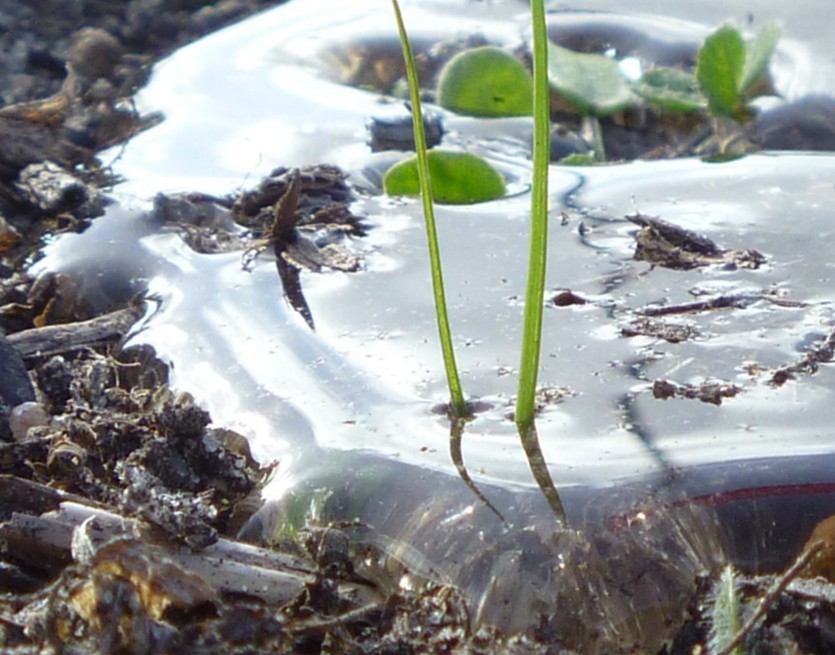
Agronomic Considerations Challenges in agricultural irrigation are often related to the intrinsic properties of water, such as cohesion and adhesion. In the water-soil system, water can either be absorbed by the soil (sorption) or repelled by it. The latter is known as soil hydrophobicity, which can result from biotic factors (such as organic matter) or abiotic factors (such as moisture levels). The use of ProHydriQ technology enhances soil wetting by enabling uniform water infiltration throughout the soil profile. This, in turn, increases water retention and leads to greater water availability for plants.
Figure 1. Hydrophobic soil
One of the challenges when using high-frequency localized irrigation (drip irrigation) is the difficulty in increasing the volume of wetted soil. Water movement in the soil may be uneven, infiltrating irregularly and flowing through the paths of least resistance. This phenomenon is known as preferential flow.
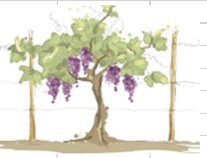
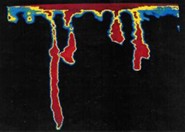
Figure 2. Diagram of water distribution in soils without and with wetting agents
Soil Treated with Wetting Agent
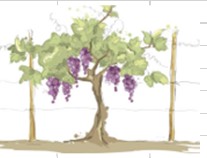
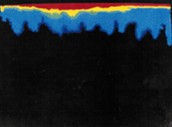
Untreated Soil (Preferential Flow)
In table grape cultivation, one of the most important factors for achieving commercially high-quality clusters is the berry size. Other key attributes include color, firmness, and sugar content.
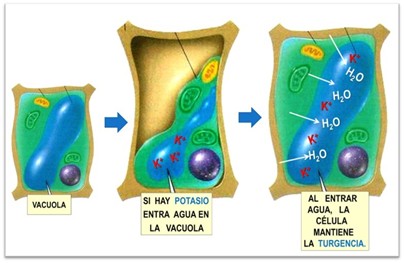
There are two main factors that influence berry expansion during growth and ripening. Cell elongation is driven by the accumulation of sugars, which are transported into the cells via the potassium (a mineral nutrient) and water flow. Therefore, the supply of potassium and water through the roots is crucial for achieving the desired berry size, within the limits allowed by the genetic potential of the cultivated variety.
Figure 3. Diagram of cell elongation dependent on water and potassium supply
ProHydriQ Field Trial in Table Grapes
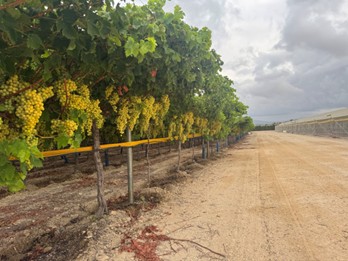
The ProHydriQ field trial in table grapes was conducted in the agro-climatic region of Vega Alta del Segura, located in Murcia, Spain. The trial was carried out from flowering to harvest, between the months of May and July 2025, on a farm in the Losilla sector, in an Open Gable-trained vineyard of the Ivory variety.
Figure 4: Table grape, Ivory variety, Losilla field. Murcia, Spain.
The vineyard soils are characterized by a loamy-sandy texture and moderate salinity. The irrigation water comes from the Tajo-Segura water transfer, with moderate salinity and an electrical conductivity of approximately 1,000 microsiemens per centimeter.
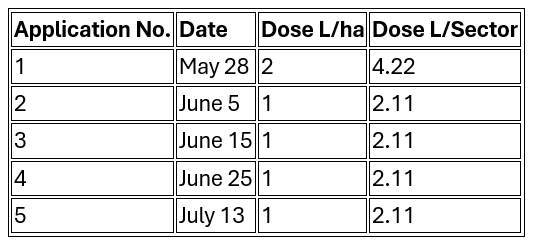
For the evaluation, ProHydriQ was applied via fertigation according to the following rates and dates:
The control area received the same irrigation and nutrition management as the treated sector. Similarly, fruit load, foliar treatments, and canopy management were equivalent.
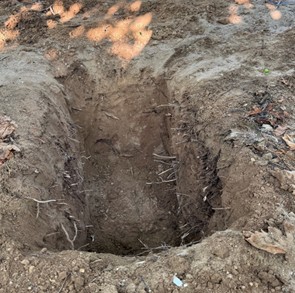
Complementary Evaluation: Comparison of Soil Moisture in Control and ProHydriQ Treatment This evaluation was carried out by measuring the volumetric percentage of soil moisture content through soil pits or trenches, using the same methodology for both treatments in terms of time and space. The pits for both the control and treated areas had identical dimensions in depth, width, and length (100 x 40 x 120 cm).
Figure 5. Photos of soil moisture exploration pits from the present trial.
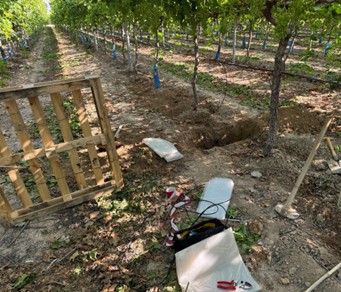
The trend in the comparative soil moisture evaluation results between the treatment and control can be seen in the following diagram from the June 6 assessment:
- Values represent the percentage of volumetric water content in the soil (amount of water in a given soil volume).
- Numerically higher values indicate greater water content measured at the same time, 36 hours after irrigation ended.

Evaluation of the Effect of ProHydriQ Treatment on Berry Size
i) Evaluation Protocol
Sampling methodology. (1) Control sector and (2) ProHydriQ treated sector.
- Approximately 400 berries were evaluated per sector, corresponding to about 70 clusters sampled.
- The sampling is divided into 5 subsamples for each sector.
- For each subsample, the number of berries and their total weight are determined.
- Finally, the average weight (grams) per berry is calculated.
- ii) Relationship between berry weight and diameter To evaluate the effect of the ProHydriQ treatment on berry size (equatorial diameter), the relationship between berry weight and diameter was used, in order to make measurements on a large number of berries much easier and more reliable. Measurements of size and weight were taken on a sample of berries, constructing a regression curve that showed the linear relationship between berry weight and diameter.

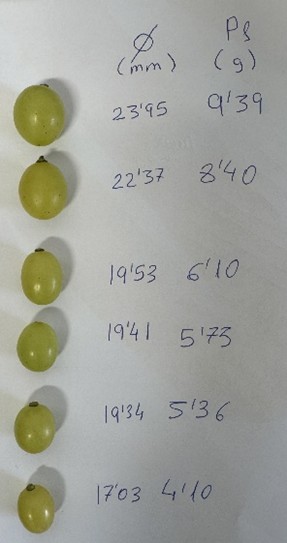
iii) Statistical result (ANOVA) There is a positive effect of the ProHydriQ treatment on berry weight (and therefore on berry size), which is statistically significant at the 0.05 level.
SUMMARY

Statistically, we can conclude that the ProHydriQ treatment increased the weight (diameter) of table grapes by 8%.